How much does a bathroom renovation cost?

This is a question that most people are interested in the most. Every bathroom renovator will advise you that it depends on your personal needs and wants and what bathware has been selected.

According to the Housing Industry Association (HIA) Kitchen and Bathroom Report released in April 2017, the average bathroom renovation cost in Sydney in 2016 was $17,600. Allowing for CPI increases, the average bathroom renovation cost in 2021 should be around $20,000.

The style and the bathware will have an influence on the price. To get an accurate quotation, feel free to contact us.

How long does it take to complete my bathroom renovation?

The time frame could vary depending on the size of the bathroom and complexity of the job. An average sized bathroom usually takes 3-4 weeks from the start of the demolition to when you can use it. Within this time frame, there is some downtime to allow for the wall render, tiling floor screed and the waterproofing membrane to dry and cure before the next stage of work can proceed.

Custom made pieces such as shower screens and vanity stone bench tops will take a bit longer to be installed as site measurement for these items need to be undertaken ofter certain elements of the renovation work is complete.

What warranty is offered with the bathroom renovation?

As per the current Home Building Act provisions, we provide a 6 year warranty on the workmanship of your bathroom renovation. Our team of professional trade subcontractors all hold current licences and insurances.

For contract work in excess of $20,000 in value, we will provide you with an insurance certificate in accordance with the Home Building Compensation Scheme (formally known as home warranty insurance).

Can I supply my own tiles and bathware for you to undertake the bathroom renovation?

Certainly! We’re happy to work with the materials you supply.

As part of the bathroom renovation do I get plumbing and electrical upgrades?

Definitely. We will not only replace the finishes you see in your bathroom (tiles, bathware, shower screen, etc.) but we will also change the plumbing pipes and electrical wiring within your bathroom area.

We will inspect your hot water system and assess its compliance to the Plumbing Code of Australia. One of the requirements of the code is that all hot water systems must have a temperature control valve fitted to ensure that the temperature of the hot water at the tap is no more than 50 degrees celcius.

All electrical sub circuits servicing your bathroom will require a residual-current device (RCD). This is a safety device that instantly breaks an electrical circuit to prevent serious harm from an ongoing electric shock. Our electrician will inspect your electrical switchboard and wiring and advise you if an upgrade is required to meet current Australian Standards.

Do I need to have a design idea before I start my bathroom renovation?

No. At Ben Oliver Bathrooms, we understand that due to a huge selection of designs, bathware and tiles, it is easy to get confused when thinking about your bathroom renovation. We are glad to assist you with possible scenarios, design and bathware selections based on our bathroom renovation experience.
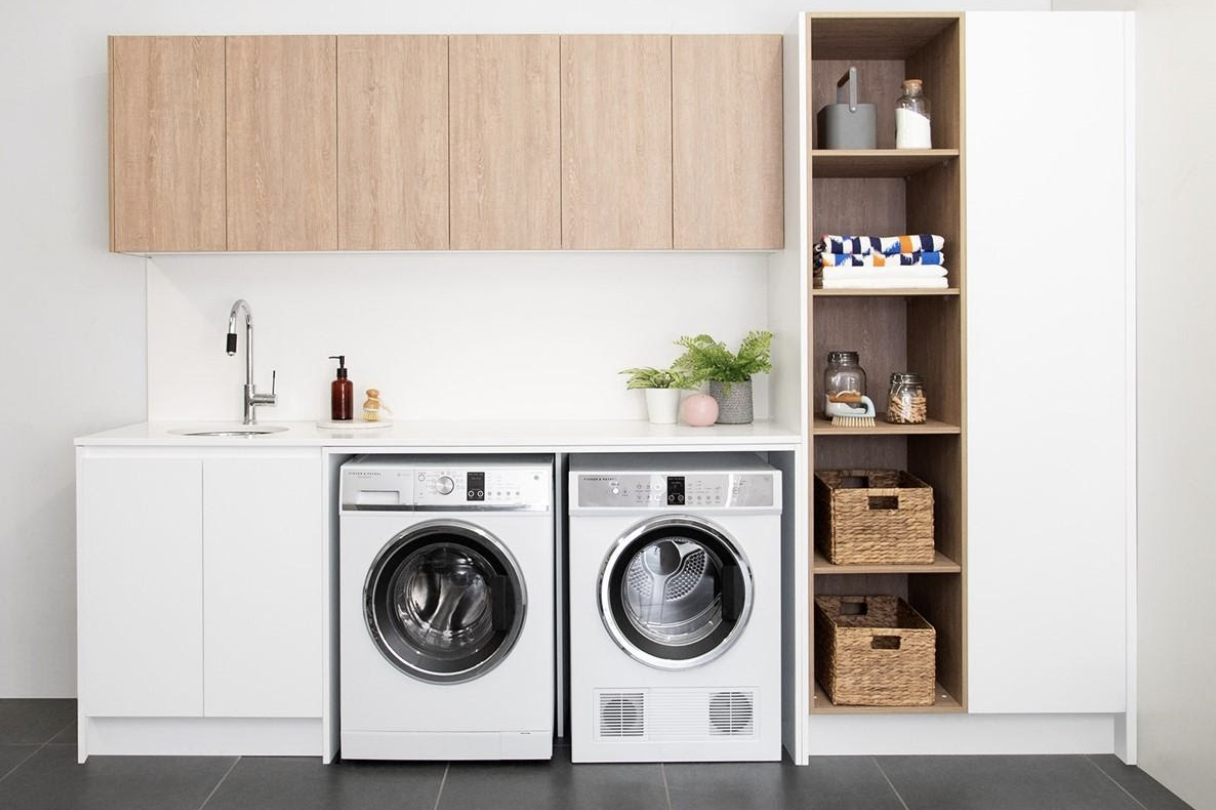
The laundry may not be the most exciting room in your home, however it’s still very important to have a room that’s functional.

It is often neglected when it comes to home improvements.  It’s not usually a highly visible space that guests will walk through, and if it basically does the job, there’s limited incentive to change it up.

But most laundry rooms could do with an update or two to help them do an even better job – and make your life easier in the process.

A well-designed laundry should be easy to work in, have plenty of storage and room for you to get your household jobs done. If it can also feel pleasant, that’s even better!

We’ll work with you to fully understand your requirements and design a laundry solution carefully tailored to your needs.

For more information or to book a free consultation with one of our design experts, feel free to contact us today.

Mould is quite possibly the most frequent hazards your bathroom faces on the day-to-day basis. As most people know very well, mould spores are formed as a result of high levels of humidity and considering how damp and heated bathrooms usually get it is very easy for the air inside to get condensed and produce large amounts of moisture. That moisture will stick to walls and the ceiling and steadily develop into mould spores, slowly taking hold and eating away your house. 

A few helpful tips that you can follow to protect your bathroom from the danger of mould are:

Ventilate your bathroom properly

The main reason why mould takes hold in bathrooms is the lack of proper ventilation. If your bathroom has a window, keep it open as long as possible to let the airflow inside. Otherwise, run the exhaust fan your bathroom might possibly be equipped with or invest into a dehumidifier to automatically manage the humidity level inside the room for you.

Exhaust fans and dehumidifiers will prove very useful even in case you have a window to work with.

Paint with anti-mould products

Unbeknown to most people is the fact that anti-mould products exist and just how useful they are in preventing the decline of your bathroom walls and ceiling. Anti-mould paint, for example, works in such a way that it creates a surface with condensation repelling abilities. If you choose to go down this road, though, you should know that the paint is not actually waterproof and it won’t offer any meaningful protection against water if the ceiling and wall are constantly exposed to excessive water.

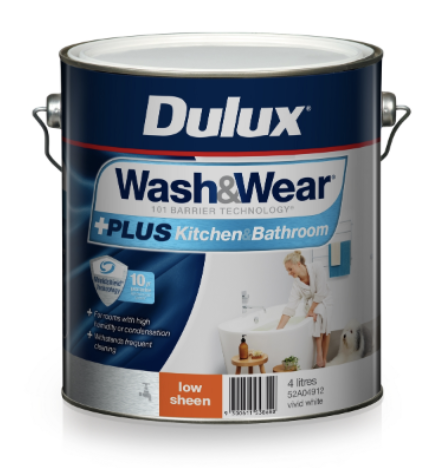
Dulux Wash & Wear +PLUS Kitchen & BathroomLow Sheen is an appropriate paint that can be used which is fortified with a powerful mould-inhibitor. This gives exceptional washability and is developed specifically for damp and humid environments such as bathrooms and laundries.

Cleaning walls and ceiling on your own

In the case that mould has already begun to show its signs, further actions to prevent its growth are impossible before eradicating the one accumulated. Your bathroom walls and ceiling will first have to be cleaned off for the previously mentioned tips to be effective.

Luckily enough, there are also a few tips you can follow for removing the accumulated mould.

Someone once said, “You are only as good as the tools you use” and as most people know very well, every job requires its own set of tools. If you choose to go the route of getting down and dirty yourself instead of calling for professional aid you should first equip yourself properly. Fortunately, cleaning off meagre amounts of mould doesn’t require more than a few essentials.

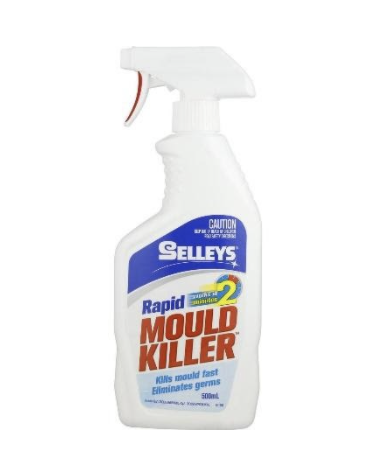
For the cleaning process we suggest to use Selleys® Rapid Mould Killer on the ceiling and walls.  Leave the solution on the surface for 5 minutes then wash with clean water and wipe dry. Several applications may be necessary to remove stubborn mould blooms.

For your own safety, you will need to protect your hands and face so items like gloves, goggles and face masks are paramount if you don’t want to risk any health issue. If protective equipment is not used, severe burns may be produced as skin and eyes will be attacked. Vapours may be harmful and ensure adequate ventilation.  This product is not recommended for people with respiratory problems.

Removing mould off tiles

We recommend using diluted vinegar which causes mould to overeat and die rather than a bleach-based product that may damage the surface of the tiles.

How to use vinegar to clean mould

  • Pour a concentration of 80% vinegar to 20% water into three buckets.
  • Grab a microfibre cloth, dip it into the first bucket, then use it for cleaning a patch of mould.
  • The same microfibre cloth should then be rinsed in the second bucket, then rinsed again in the third to ensure cross-contamination doesn’t occur.
  • Microfibre cloths, which reach deep into tiny crevices and have a slight electric charge, can be bought cheaply and washed on a hot cycle in the washing machine with vinegar up to 100 times.
  • On completion, wash the tiles with soapy water

Mould in bathroom grout or silicone

These areas deserve a separate mention. Once mould gets its grip here, getting rid of it is almost impossible. When mould grows, it develops hyphae, or roots, which grow into the grout or silicone. You can clean the surfaces of the grout or silicone, but not deep into it. In those cases, you have to replace the silicone or re-grout your bathroom.

Big bathrooms are great, and when it comes to designing one, they offer plenty of freedom, a fantastic freestanding bath, and lots of room for storage too.

Unfortunately, not everybody has the necessary floor space for installing big spacious bathrooms. Most homes have medium to smaller-sized ones and very little available floor space.

Small bathrooms may be tricky to work with, but that doesn’t mean they have to be dull and boring! In fact, a tiny bathroom can still be luxuriously designed, and with a clever well thought out plan, you can make the most of every inch of space available.

If you are currently facing this situation and have no idea how best to design your bathroom in such a small space, here’s a guide that will surely get your thinking caps on.

Making the most of a small bathroom space

When it comes to designing a small bathroom, careful consideration is a must; you have limited floor space; however, you still need a bathroom that is functional, practical, and aesthetically pleasing too. The idea is to use every inch of space in the best possible way, and before you go any further you have to think about the areas that use the most space such as,

  • Bathtub
  • Sink basin
  • Vanity
  • Storage
  • Shower

To save precious space, a shower and bathtub can be combined, or perhaps you may opt to take out the tub altogether and replace it with a shower enclosure. Having separate vanity and storage units are great for larger bathrooms, but you may have to combine a sink, vanity, and storage into one unit as this multi-functional trick will free up some space.

Making the most of a small bathroom space

Bathroom layout design generally revolves around plumbing constraints so this will need to be looked at carefully.  Any bathroom renovation work that involves plumbing should only be performed by a licenced plumber.

Fittings and Measurements

Before any bathroom can be fitted, it will require careful and precise set-out and it’s important that you get that right. You will also have to consider the size of the vanity you want and the available space to fit.

Shower Units

If you like the idea of having no bath and only a shower enclosure instead, that’s great! This is the best way to save space. Still, the cubicle can be obstructive if the door opens out as it may be eating away at your available floor space.  Instead, consider sliding door units or even create a beautiful and stylish walk in shower if you want maximum open space.

Bathtubs

Is having a bathtub a must? Bear in mind that tubs are not all one standard size, you can get smaller ones that are ideal for smaller spaces and even freestanding tubs can fit into reduced areas with clever planning and design layout.

Wall hung vanity and toilet

A fantastic way to maximise a small bathroom’s space is to use wall hung cabinetry and toilet along with large format floor tiles. They show more of the floor and give the illusion that the bathroom is larger than it is.

Storage

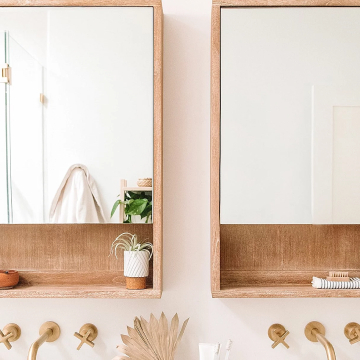
There are many options when it comes to simple space-saving storage. Try a mirrored cabinet that is recessed in a timber framed wall that can also span horizontally beyond the vanity.  Built-in wall niches can also save valuable space while looking incredibly stylish at the same time.